
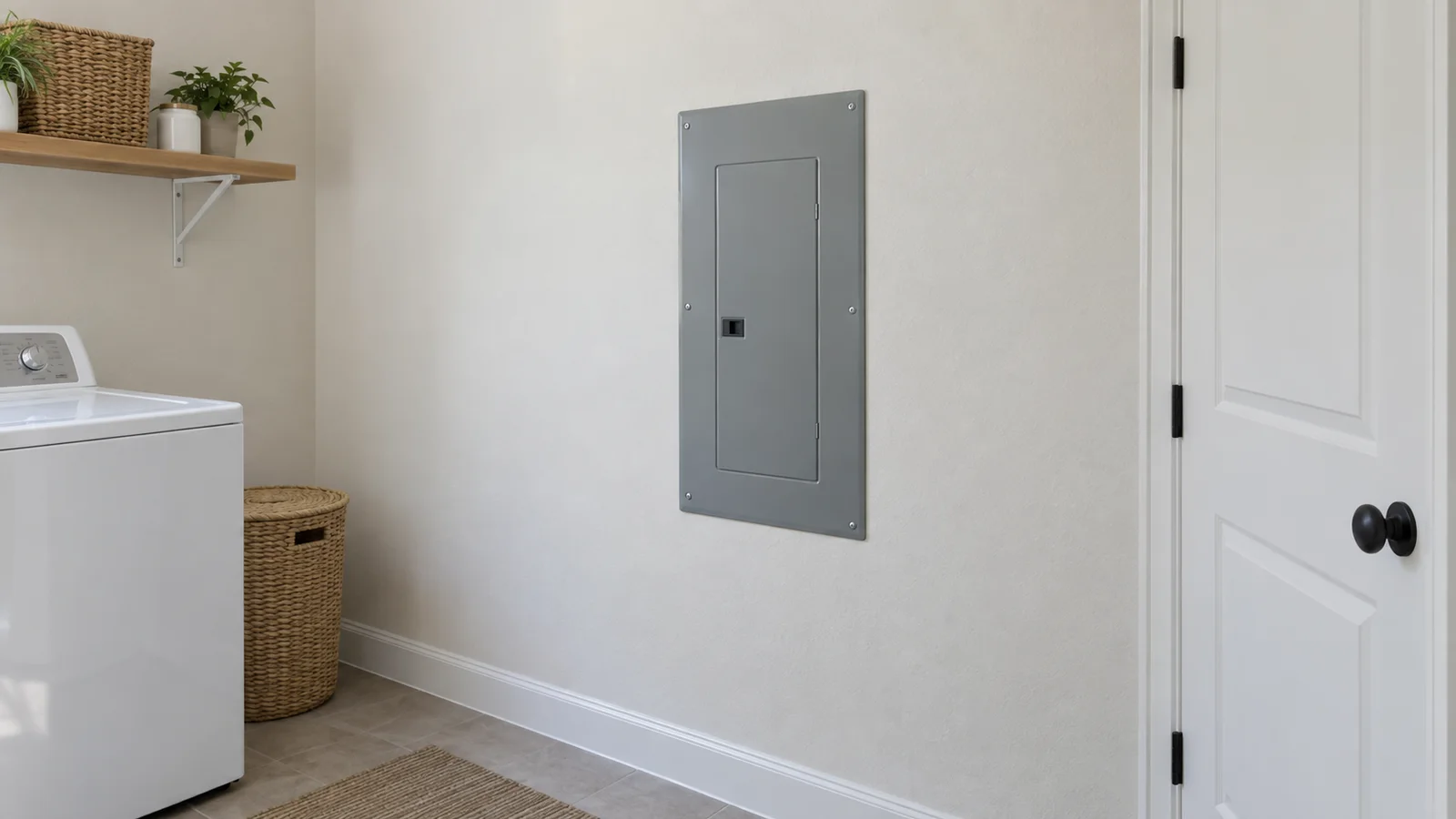
An appliance stops, the room goes quiet, and the same circuit is out again. If a circuit breaker keeps tripping in your Krum home, do not treat restoring power as the whole solution. The useful question is why that circuit is shutting off and whether something you are using should stay disconnected until it is checked.
A breaker is a protective device, not an inconvenience to defeat. The Electrical Safety Foundation International explains that an overloaded circuit can cause a trip and that continuing trouble needs an electrician’s diagnosis (ESFI). This guide helps you organize safe observations before a visit; it does not provide instructions for opening a panel, testing live wiring, or replacing a breaker.
What a recurring trip does and does not tell you
An overload is one possible explanation, but it is not a diagnosis you can confirm from the timing alone. The same symptom may need investigation of the appliance, circuit, connections, or protective equipment. A breaker’s position does not reveal the condition of wiring hidden behind a wall.
For example, a room losing power when several appliances operate together gives the electrician a useful pattern. It does not prove that installing a larger breaker is appropriate. C&G lists diagnosis of tripping breakers, dead outlets, flickering lights, and faulty wiring among its electrical repair services.
Do not buy a replacement breaker based on appearance or assume a newer breaker will solve the problem. The repair decision belongs after diagnosis, not before it.
Safe observations for Krum homeowners
Record which rooms or devices lost power and what was running immediately beforehand. Note whether the event followed a new appliance, a change in room use, or a recent remodel. If a circuit label is available without opening equipment, include it in your notes.
Keep the description factual: “The microwave and countertop oven were running together” is more useful than “the breaker is too small.” Mention intermittent flickering, an outlet that no longer holds a plug securely, or a device that has stopped working. The CPSC advises having malfunctioning outlets checked and not continuing to use outlets or switches that are unusually warm (CPSC home electrical checklist).
Do not touch suspect equipment to see whether it feels hot, insert a tester, or remove a cover. If you have already noticed heat, odor, damage, or a shock, describe what happened without recreating it.
Match the symptom to the next step
| Observation | Useful information to record | Safe next step |
|---|---|---|
| Trouble appears with several devices operating | Devices and approximate timing | Stop the combination and arrange diagnosis if trouble recurs |
| One appliance is repeatedly involved | Appliance name and where it was used | Stop using that appliance pending assessment |
| Power returns and fails again | How quickly it failed and what remained connected | Leave the affected circuit out of service and call |
| Flickering or dead outlets accompany the trip | Rooms and fixtures affected | Tell the electrician about the full pattern |
| Smoke, active arcing, or a fire develops | Do not pause to collect details | Leave the area and call 911 from a safe location |
The table is a triage aid, not a remote repair prescription. It should help you avoid testing the same failure repeatedly.
For a recurring breaker problem in Krum, call (940) 566-0711 to discuss the symptoms and a free estimate.
What stays on the electrician’s side
Panel-cover removal, live measurements, connection repairs, breaker replacement, and decisions about protective-device ratings belong to a qualified electrician. Do not install a larger breaker, tape a handle in position, or bypass a protective device. A tripping circuit must not be made to stay on by defeating its protection.
There is also a difference between fixing a defect and changing how a home supplies power. An electrician may find a repair is needed, or may recommend a separate circuit after evaluating the loads. The answer depends on the assessment, not on how often an online checklist says a breaker should trip.
Repair, dedicated circuit, or panel assessment?
A repair addresses an identified problem. A dedicated circuit provides a separately planned supply for a particular load. A panel assessment looks at the wider system and planned additions. These are different scopes, and none should be selected merely because a breaker has tripped.
C&G lists dedicated circuits for appliances and home offices on its residential service page. Its panel upgrade page lists load calculations, circuit balancing, repairs, and service upgrades. Ask the electrician which finding supports the recommended scope and whether a smaller repair resolves the concern.
If you expect an EV charger, workshop equipment, or a remodel later, mention it before the estimate. Future plans can affect the assessment, but they do not automatically require a replacement panel.
Prepare for a repair visit in Krum
C&G’s Krum service-area page provides local electrical service information. Share your address and the affected equipment when discussing the visit.
Keep the panel area accessible without opening it or moving electrical equipment. Gather your symptom notes, appliance information, and any previous repair records. Explain whether the affected room supports work, refrigeration, or another use that influences planning.
Ask what will be inspected, whether an outage is expected, and what approval is needed before additional work begins. If a repair leads to a recommendation for new circuits or upgraded service, ask for that recommendation to be explained separately. A clear scope is more useful than a vague promise to “fix everything.”
Frequently asked questions
Can I keep resetting a breaker that trips?
Do not use repeated resets as a troubleshooting method. ESFI recommends contacting an electrician when the problem continues (ESFI). Leave the affected circuit out of service when the cause is unresolved, and explain what was operating before the trip rather than deliberately reproducing the failure.
Does every trip mean the breaker is defective?
No. A trip is a symptom that needs context, not proof that the breaker itself needs replacement. Record the affected devices and timing so the electrician can investigate. Avoid buying parts first or asking for a larger breaker as a shortcut around the diagnosis.
Will I need a panel upgrade?
Not necessarily. Ask for the findings that distinguish a wiring or device repair from a capacity concern. C&G’s panel service includes evaluation and repair as well as upgrades (panel services). Your existing equipment, condition, and future loads should guide the recommendation.
What should I tell C&G when I call?
Describe the rooms affected, the devices running, whether this has happened before, and any damage, odor, flickering, or shock you already noticed. Do not recreate a hazardous event to collect better details. Explain what is currently disconnected and whether the circuit has remained off.
Can a separate circuit help with an appliance?
It may be worth evaluating, but it is not a conclusion to make from one trip. C&G offers dedicated appliance circuits (residential services). The electrician should determine whether the concern is a fault, a load-planning issue, or another condition before proposing that work.
Call C&G Electric about recurring breaker trips
Bring a description of the problem rather than a preferred replacement part. Call (940) 566-0711 for a free estimate; C&G lists office hours as Monday–Thursday 7:30 AM–5:00 PM and Friday 7:30 AM–4:00 PM (C&G Electric). This article does not promise emergency or after-hours service.